
How to Save Money on Groceries in 2026
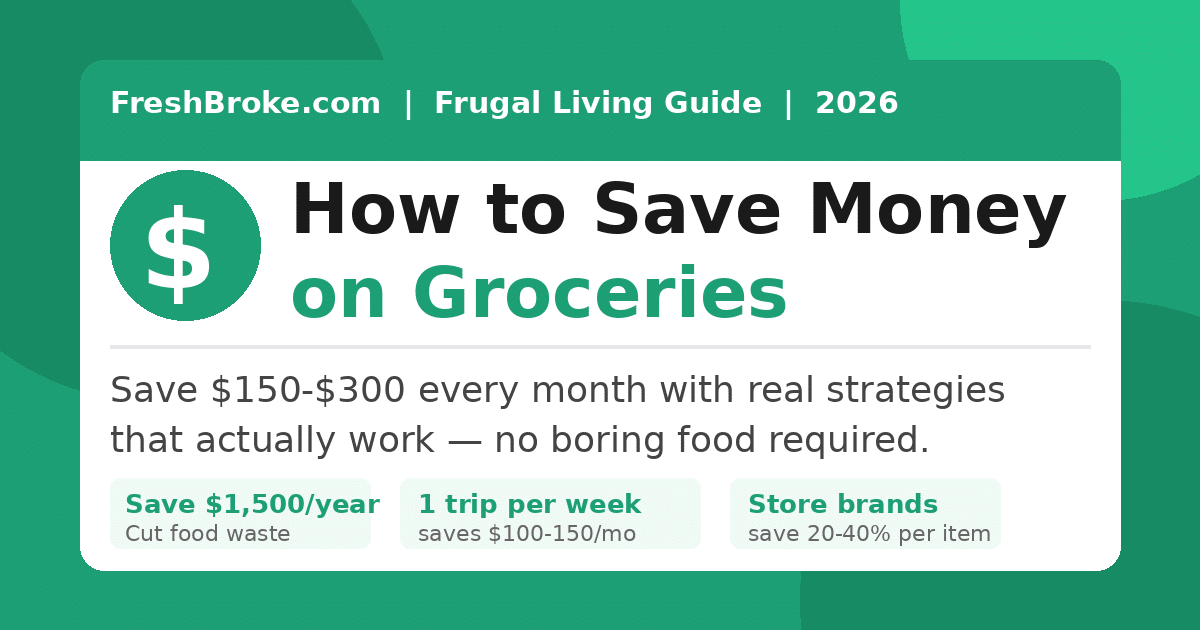
One can really make savings on groceries by meal planning beforehand, purchasing store brands, making use of cash-back apps, and buying from one stop only in a week. The truth is that people spend excessively when it comes to food not because it’s expensive but because it’s done without a plan. By following the tips presented above, one will definitely be able to save from $100 to $200 monthly from the very first month.
Even now, I remember being in the aisle for cereal with my phone’s calculator app out because I needed to do some calculations that I definitely shouldn’t have had to do. This wasn’t recreational mathematics; this was survival mathematics – figuring out whether or not I could afford the named-brand oatmeal or if I had to grab the generic brand that seemed to have been bought as a last resort.
This was the month I realized I didn’t have a plan. I was just going into the store buying everything that I wanted and hoping that I could somehow figure it all out once I got to the checkout line.
What nobody ever tells you about saving money on grocery shopping is that the issue is never actually the cost of the foods themselves. The real issue is the lack of planning.
Why You Are Paying More For Groceries Than You Should
It’s unlikely that those in their 20s and 30s are making deliberate attempts to overpay when shopping for groceries. The process takes place incrementally and nearly imperceptibly – from the purchase of an additional bag of chips on the spur of the moment to buying duplicate items from the pantry.
As indicated by the USDA, the typical American family wastes anywhere from 30 to 40 percent of its purchased food. From a monetary standpoint, that means of every dollar spent in the grocery store, 30 to 40 cents’ worth of food will be ultimately thrown out; avoiding food waste alone, regardless of the changes in shopping habits, can save around $1,500 annually.
When I first came across such information, it took me aback. I thought that I was being cautious about my finances. I wasn’t – I just wasn’t wasting them at quite the same rate that I could have been.
How Much Does It Really Cost to Eat Each Week?
Before any real progress is made, it’s important to get a sense of what sensible groceries look like. A lone person who frequently cooks at home will do fine on a weekly budget of between $50 and $75; a pair of people can comfortably get by on a budget of $100-$130 as long as both are actively cooking.
Meal planning – thinking about what you are going to eat each week before you buy only what you need for the meal – is by far the best thing you can do. It takes roughly 20 minutes one Sunday, and it prevents the continuous cycle of purchasing foods that you’ll never turn into anything resembling a meal.
The lack of a plan allows you to easily find yourself with a full fridge of individually rational decisions that collectively add up to absolutely nothing for dinner tonight. Produce rots. Leftovers go stale. And another $15 disappears into take-out food that wasn’t budgeted.
How to Save Money on Shopping Without Spent Too Much Time on Cutting and Applying Coupons?
A widespread belief that saving money on groceries requires spending countless hours cutting coupons is something that makes many people reluctant even to try this method. However, the great thing about saving strategies mentioned below is that planning is required rather than paperwork.
The following methods will always help you save some money on shopping:
Plan no more than one shopping trip per week
Numerous studies prove that planning just one trip per week to grocery stores helps you save somewhere from $100 to $150 monthly. The reason behind this is simple – any unplanned shopping trip usually becomes an impulse shopping without any particular list and plan.
Initially, I made about three-four visits to stores during a week thinking that I’m going there just “to buy a couple of things”. In fact, this cost me a lot and after the change, the amount of money spent on food reduced significantly.
Make sure that you use cashback apps before any shopping trips
There are many applications out there which work as rebates such as Ibotta, Fetch, and Rakuten. You can find offers before your trip, choose the ones you’re going to buy and get back the money on your account. The whole process takes about 5 minutes max.
For example, once I made $22 extra while choosing another brand of butter. This time I used a special offer to receive some extra cash. Everything else was the same, but I had to switch brands.
Switch to store brands when it comes to basics
Another habit that costs many people lots of money is choosing a certain branded product just because it is branded. There is no difference for canned tomatoes, dried pasta, rice, olive oil, paper products. They all come from the same factory; only labels differ and the price difference is $1-$3.
Changing five products per week can lead you to monthly savings of $20-$50. It is better to be loyal to branded products if you really feel like it, but it is necessary to limit this habit only for products that really need attention.
Consider purchasing staples from discount grocery retailers
Aldi and Lidl are well-known companies that provide consumers with discounts. These shops usually have products that are cheaper than those offered by other grocery retailers: on average, the price may be up to 20-40% lower. The range of products is more limited, but the quality is good.
The way to go: you can buy staples at Aldi and Lidl, and the rest from a traditional grocery retailer.
Tips for Grocery Budgeting in Tense Financial Times
The first rule of good grocery budgeting is simple but surprisingly challenging – know your upper spending limit per week BEFORE going shopping. To enter the store without setting any boundaries and just see how it goes will result in overspending by definition; you remove the only thing that could stop you from doing so at the exact moment you need it most.
Think of the sum set aside for groceries as a hard boundary. If it is $60 per week, $60 is the maximum amount available. Everything above that needs to go back.
There are also several other tips to help with the process:
- Always make yourself a list of things you intend to buy and stick to it religiously. Your list should be the actual commitment to spend that amount in the form of goods.
- Eat before going grocery shopping. As the studies have shown, shopping while hungry increases both the amount and caloric content of purchases made. Avoid the variable and don’t shop hungry.
- Buy fresh whole vegetables, never cut or washed ones. For instance, broccoli florets can be two times more expensive than buying a whole head of the same product. The extra time required to prepare is less than two minutes.
- Freeze all fresh produce before the expiration date. Bread, meat, and almost all vegetables can be safely frozen. This is free, throwing away food isn’t.
My Purchase Blunder That Cost Me More Than $200
This happened when I began to believe that “health” products came in prepackaged containers and thus were a good investment. I was buying single servings of overnight oats, single-serving packs of almond butter, as well as single-serving plates made up of six crackers, two pieces of cheese, and some grapes.
It was just normal food, but at a high markup rate. I was paying about $4 for each serving of oats while I could buy a large container of oats and pay just 30 cents per equivalent serving size.
Let us state the obvious – convenience packaging will always cost you the most when it comes to foods. It is not because the quality is better; it is because you pay for the process and packaging and presentation. By buying the bulk/unpackaged version and packing it yourself, it will take less than a minute, and you will save 80 percent off the price per serving.
How to Save Money When Shopping for Groceries: Tips from Inside the Store
In addition to making purchases based on price, there are practical considerations that will impact how much money you will spend inside a grocery store.
Start shopping on the store’s perimeter
The perimeter shelves at most grocery stores are where you will find the freshest and unprocessed foods like meat, dairy, eggs, and fresh vegetables. In contrast, the inner shelves are occupied by more processed goods that have undergone extensive branding – and therefore have high mark-ups compared to their value in terms of nutrition.
As such, the approach would be to start your shopping along the perimeter where you allocate the biggest part of your budget and venture into the center shelves only if you have identified products needed according to your list.
Purchase food based on unit price
While the retail price of any product gives us no indication of its value in relation to other products in the store, the unit price, expressed in cost per ounce, pound, or number of individual units, does just that. While the retail price is boldly displayed on the label, the unit price is written in smaller print under it.
It has been proven that choosing products with the lowest unit price will save you money regardless of changes in the amount or quality of the product you purchase. This tip can work wonders in your efforts to save some cash on groceries.
Take a look at the markdown/clearance area
Almost all grocers have a special area where items that have reached their sell-by date are marked down by as much as 30 to 50 percent. These products are absolutely safe for consumption as they need to be consumed either immediately or frozen at the first opportunity.
They can include meats, bread, and some dairy products. I regularly buy family-size chicken packs for as cheaply as $3 when marked down from $8 this way.
Things You Can Do Right Away
- Take stock of what you have in your fridge, freezer, and pantry before heading to the store again
- Plan at least five meals based on what you already have in the house before buying anything else
- Install Ibotta or Fetch and go through the deals available before heading out
- Decide on the maximum amount of money you will spend during your shopping session, and shop in cash to help yourself stick to it
- Replace a brand-name food product you use regularly with its generic alternative and see if you can notice any differences
Together, these five actions will make for a good start toward how to save money on groceries permanently.
How to Go Grocery Shopping Within Your Budget Without Feeling Deprived
One of the best reframes I have come across states the following. Groceries shopping within your budget is not about eating less; it’s about wasting less, thinking ahead, and saving the money you were already throwing away on something else.
This is not about sacrificing the quality of your food. Enjoying a good meal is perfectly possible without spending too much. Instead, this is all about how much of your grocery budget actually lands on your plate instead of going into the trash.
People who say otherwise are interested in your money for their gain.
Frugal living doesn’t imply living in poverty. This means taking control of things, and that means everything.
Frequently Asked Questions
Q: How do you go grocery shopping while staying within a budget?
A: Start with setting a clear weekly dollar limit for yourself and taking that with you along with a planned-out shopping list based around it. Focus on the store’s perimeter for fresh produce, meats, and dairy; choose cheaper store-branded versions of usual items; and avoid shopping hungry because it inevitably means making extra purchases. Just one visit per week will save more money than several random trips.
Q: How can I budget my groceries when I don’t know how to start?
A: First, look back at what you have spent on food last month and determine your average expenditure. Next, create a goal of reducing that total by 15 to 20 percent. Plan out your meals for the entire week ahead of time, and stick to buying only ingredients necessary for those meals. Such approach eliminates 90 percent of unnecessary expenditures.
Q: What can I do to save money without using coupons?
A: There are many simple actions you can take: cashback services like Ibotta and Fetch return you a few cents on each purchase you make without putting any effort; store branded items are always $1-$3 cheaper than name-brand counterparts; buy in bulk to save money on non-perishables; buy from the markdown section where all the products are marked down between 30 to 50 percent. None of this involves managing any coupons.
Q: How to cut costs when buying meat at the store?
A: It is almost inevitable that larger packs of meat are sold cheaper per pound; split and freeze the surplus right away after coming home. Markdown sections offer large discounts on meats which are approaching expiration: in some cases up to 40 to 50 percent off. The best deals you could find in almost any supermarket are cheap cuts of chicken thighs, eggs, tuna, and beans.
Q: How to save money shopping at the grocery store week after week?
A: Saving money requires a system, not an occasional effort. Always plan meals for the week and write down what you intend to buy; keep track of your pantry items to avoid buying unnecessary duplicates; use cashback app on every visit; and analyze your expenses based on receipts. Small consistent efforts lead to major savings in the long run.